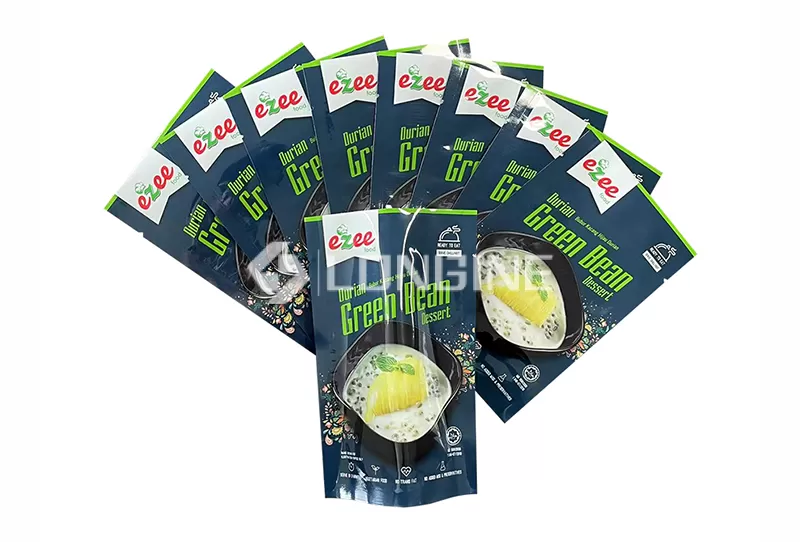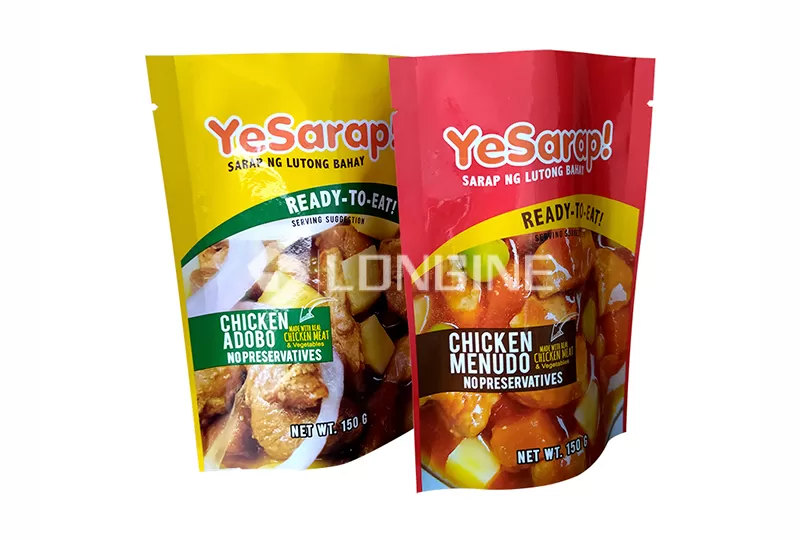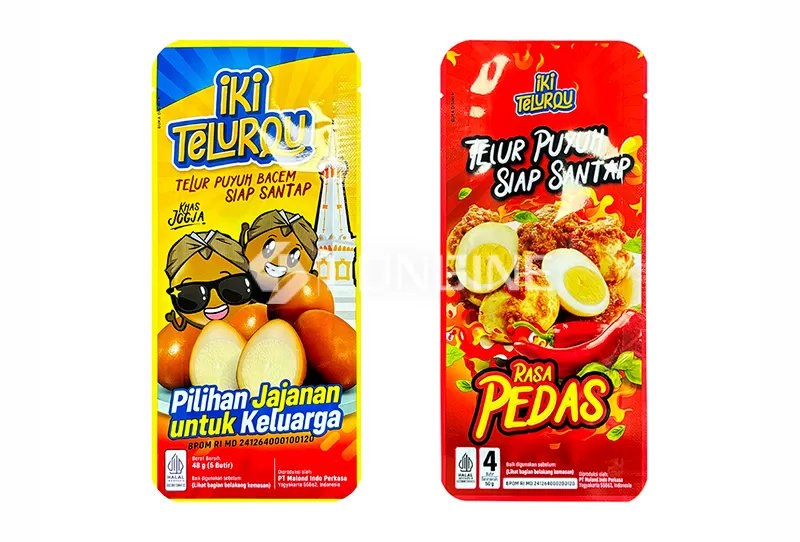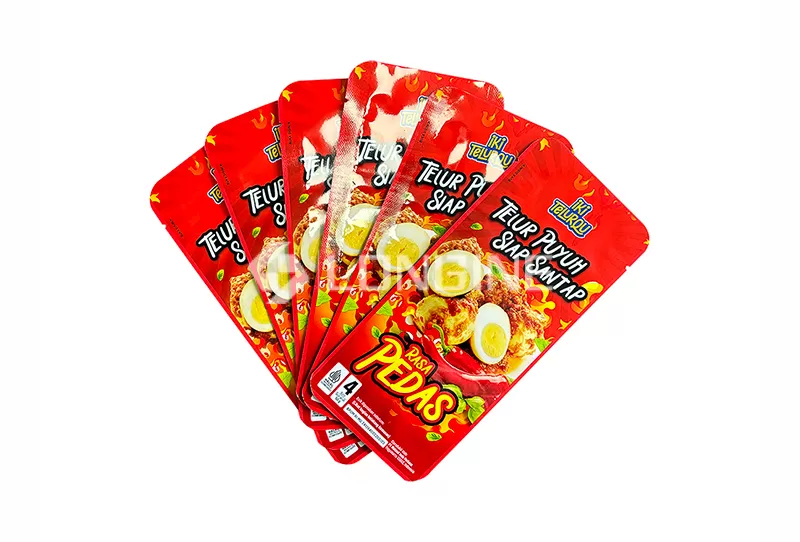
Retort pouches are widely used for ready-to-eat meals, meat, seafood, sauces, and pet food. They offer lightweight packaging, strong barrier protection, and convenience. However, as sustainability becomes increasingly important, food brands are asking an important question: Can retort pouches be recycled?
The answer depends mainly on the pouch material structure and the recycling facilities available in the target market.
1. What Materials Are Used in Retort Pouches?
Most traditional retort pouches use multiple layers of materials to withstand high-temperature sterilization and protect food quality.
A common structure may include:
PET: Provides strength and a printable outer surface.
Aluminum Foil (AL): Blocks light, oxygen, and moisture.
PA (Nylon): Improves toughness and puncture resistance.
RCPP: Provides the inner heat-sealing layer and retort resistance.
These layers work together to deliver the performance required for food packaging.
However, combining different materials makes separation difficult during conventional recycling processes.
2. Why Are Traditional Retort Pouches Difficult to Recycle?
Traditional multilayer retort pouches present several recycling challenges.
Mixed material structures: Different plastic and aluminum layers are bonded together, making separation technically difficult.
Food contamination: Leftover food and grease may affect the recycling process if packaging is not properly emptied and prepared.
Limited recycling infrastructure: Many local recycling systems are not designed to process flexible multilayer packaging.
Performance requirements: Retort packaging needs to withstand heat, pressure, and demanding storage conditions. These requirements can limit the choice of recyclable materials.
As a result, traditional aluminum foil retort pouches are generally not accepted in ordinary household recycling programs.
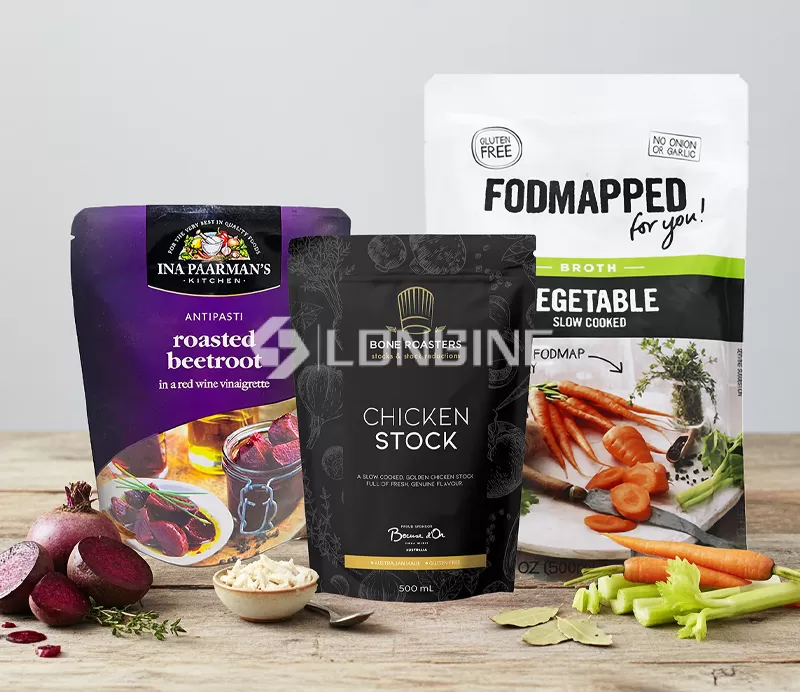
3. Are There Recyclable Retort Pouch Alternatives?
Packaging manufacturers are developing alternative structures to improve recyclability while maintaining the performance needed for retort applications.
Mono-Material Retort Pouches
Mono-material packaging uses one main polymer family, such as polypropylene (PP), instead of combining several incompatible materials.
Potential advantages include:
Easier compatibility with certain recycling streams
Reduced material complexity
Better alignment with flexible plastic recycling initiatives
However, mono-material retort pouches must still meet barrier, sealing, and high-temperature resistance requirements. Their recyclability also depends on local collection and recycling infrastructure.
Reduced-Aluminum or Aluminum-Free Structures
Some packaging designs explore alternatives to conventional aluminum foil structures.
These may help reduce material complexity or improve product visibility. However, the actual barrier performance must be evaluated carefully, especially for foods requiring long shelf life.
4. How Can Food Brands Make Retort Packaging More Sustainable?
If your brand wants to improve packaging sustainability, consider the following steps:
Review the current material structure: Identify whether all layers are necessary for the product.
Evaluate mono-material options: Ask suppliers about retort-compatible PP-based structures.
Optimize pouch thickness: Reduce unnecessary material without compromising strength.
Consider product shelf-life requirements: Packaging must protect food effectively to help prevent food waste.
Check local recycling guidelines: Confirm whether the proposed structure can actually be collected and recycled in your target market.
A recyclable design should never be selected without testing its suitability for the intended food and sterilization process.
5. Recyclability vs. Packaging Performance
Choosing sustainable retort packaging involves balancing several factors.
| Packaging Option | Main Advantage | Main Challenge |
|---|---|---|
| Aluminum foil retort pouch | Excellent barrier protection | Difficult to recycle |
| Transparent high-barrier pouch | Product visibility | Recycling depends on material structure |
| Mono-material retort pouch | Potentially improved recyclability | Requires performance validation |
| Reduced-material pouch | Uses less packaging material | Must maintain package strength |
There is no single solution suitable for every food product. The best option depends on shelf-life targets, food characteristics, processing conditions, and local recycling systems.
Frequently Asked Questions
1. Are aluminum foil retort pouches recyclable?
Most traditional aluminum-plastic laminated retort pouches are difficult to recycle through conventional household recycling programs because their layers are bonded together.
2. Are mono-material retort pouches recyclable?
They may be more compatible with certain recycling streams, but actual recyclability depends on the complete pouch design and local recycling infrastructure.
3. Can retort pouches be made without aluminum foil?
Yes. Some aluminum-free high-barrier structures are available for specific applications. Their suitability depends on the required barrier performance and sterilization conditions.
4. Are recyclable retort pouches suitable for all foods?
No. Each structure must be evaluated for its food compatibility, barrier properties, sealing performance, and ability to withstand the intended retort process.
Explore More Sustainable Retort Pouch Solutions
Recycling traditional retort pouches remains challenging, but material innovation is creating new possibilities for food packaging.
At Longine Packing, we provide flexible packaging solutions for different food applications. Contact us to discuss retort pouch materials, customized structures, and packaging options that match your product requirements.