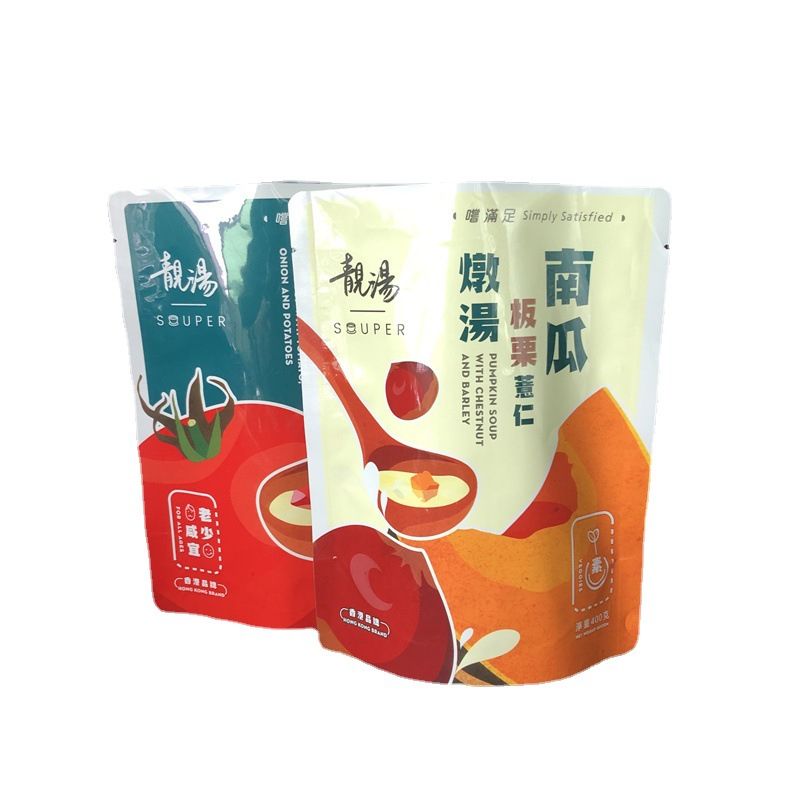
Choosing the best retort pouches for food packaging requires more than selecting a pouch size or material. The packaging must withstand high-temperature sterilization, maintain reliable seals, protect food quality, and meet the product's shelf-life requirements.
Retort pouches are widely used for ready-to-eat meals, soups, sauces, meat, seafood, cooked rice, and wet pet food. However, different products have different barrier, durability, and processing requirements. Selecting the wrong pouch structure may lead to leakage, delamination, reduced shelf life, or packaging failure during sterilization.
For food manufacturers, the best approach is to evaluate the food product, retort process, material structure, pouch format, and quality requirements together. This guide explains the key factors to consider before ordering custom retort pouches.
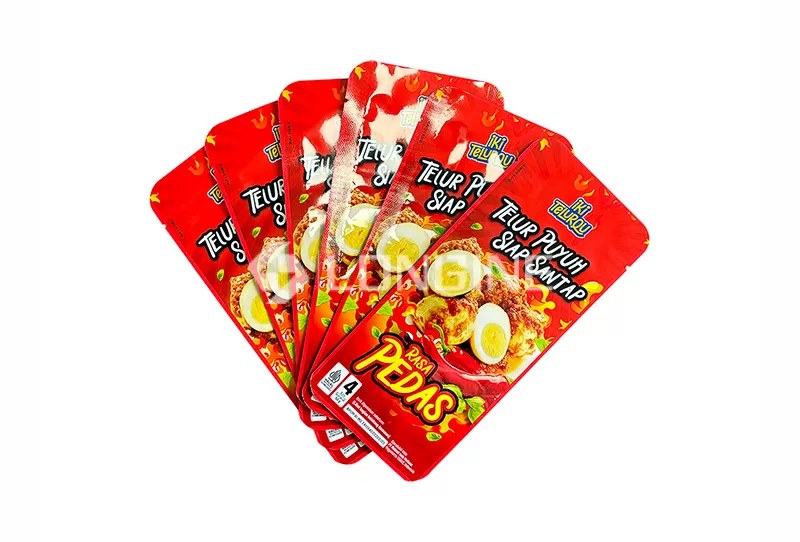
1. Start with Your Food Product Requirements
The first step is to understand the product that will be packaged. Food composition, texture, oil content, moisture, and particle size can all affect packaging performance.
For example, a liquid soup may require reliable leak resistance, while a meat product containing bones may need additional puncture resistance. Oily foods may also require careful evaluation of the inner sealant layer and its compatibility with the product.
Before choosing a retort pouch, identify the following factors:
Food type: Ready meals, sauces, seafood, meat, rice, or pet food.
Product consistency: Liquid, paste, semi-solid, or solid.
Fill weight: The amount of product placed in each pouch.
Product characteristics: Oil content, acidity, moisture, and sharp or hard particles.
Target shelf life: The intended storage period and conditions.
Distribution environment: Transportation distance, handling, stacking, and storage conditions.
These details help determine the appropriate material structure, pouch dimensions, and mechanical performance requirements.
2. Choose the Right Retort Pouch Material Structure
Retort pouches are typically made from multiple laminated layers. Each layer serves a different purpose, including printing, barrier protection, mechanical strength, and heat sealing.
A suitable structure must withstand the intended sterilization process while maintaining its performance after cooling, storage, and transportation.
Common Materials Used in Retort Pouches
| Material | Main Function | Key Consideration |
|---|---|---|
| PET (Polyester) | Provides printability, strength, and dimensional stability | Must be suitable for the intended retort application |
| Aluminum Foil (AL) | Provides strong protection against oxygen, moisture, light, and aroma transmission | Suitable when high barrier and light protection are priorities |
| Nylon (PA) | Improves toughness and resistance to punctures and abrasion | Useful for products with hard particles or demanding handling conditions |
| Retort-Grade CPP/RCPP | Provides the inner food-contact and heat-sealing layer | Must maintain seal performance under the specified processing conditions |
A common foil-based structure is PET/AL/RCPP. A nylon layer may be added when additional toughness is needed. The final construction should be selected according to the food product and validated retort conditions rather than using one structure for every application.
The adhesives, printing inks, and other components must also be compatible with the intended thermal process and applicable food-contact requirements.
3. Decide Between Aluminum Foil and Transparent Retort Pouches
One important decision is whether to use a foil-based pouch or a transparent high-barrier structure.
Both options can be suitable for specific applications, but they offer different advantages.
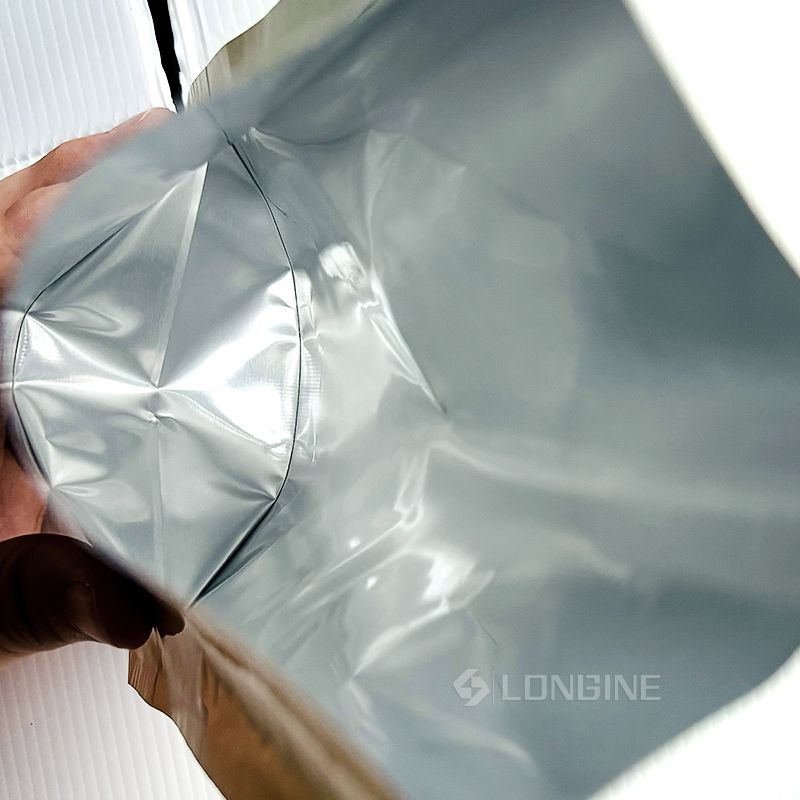
Aluminum Foil Retort Pouches
Foil-based retort pouches are a common choice for products that require strong protection from oxygen, moisture, and light.
Key advantages include:
Strong barrier performance.
Protection against light-related product deterioration.
Suitability for many shelf-stable food applications when correctly specified.
A practical option for products sensitive to oxidation or aroma loss.
However, aluminum foil prevents consumers from seeing the product through the package and is generally unsuitable for microwave heating.
Transparent Retort Pouches
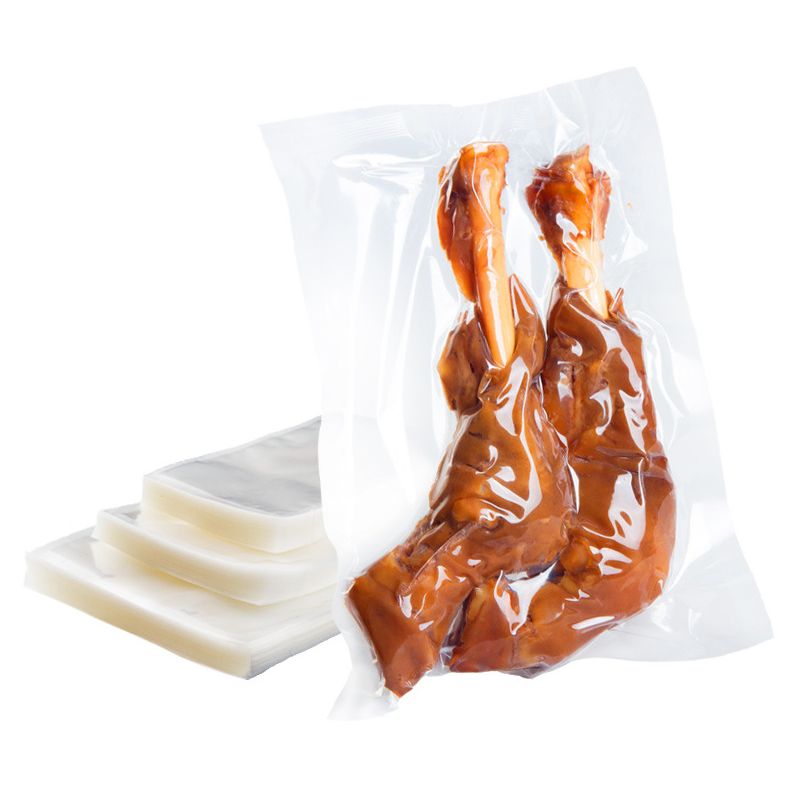
Transparent retort pouches allow consumers to see the food inside, which may benefit products where appearance influences purchasing decisions.
Potential advantages include:
Product visibility.
A clear presentation of food color and texture.
Compatibility with selected heating and packaging applications when specifically designed for them.
Their oxygen and moisture barrier performance depends on the particular material structure. Transparent does not automatically mean recyclable or microwave-safe, so these properties must be verified separately.
How to choose: Consider a foil-based structure when strong light and barrier protection are priorities. Evaluate transparent high-barrier structures when product visibility is important and the material can meet the required shelf-life and processing specifications.
4. Confirm the Required Sterilization Conditions
Retort pouches must be designed for the actual thermal processing conditions used by the food manufacturer.
Commercial retort processing commonly involves elevated temperatures, sometimes around 121°C or higher. However, there is no single temperature-and-time combination suitable for every food product.
The required process depends on factors such as:
Food formulation and acidity.
Product consistency and particle size.
Filling weight and pouch dimensions.
Retort equipment and heating method.
Initial product temperature.
Heating, holding, pressurization, and cooling conditions.
The selected pouch must withstand the complete processing cycle without unacceptable deformation, seal failure, or delamination.
It is equally important to distinguish packaging suitability from food safety validation. A retort-compatible pouch does not make a product shelf-stable by itself. The food manufacturer and qualified process specialist must establish and validate the appropriate thermal process for the product and package.
Before confirming an order, provide your packaging supplier with the relevant retort specifications so the proposed material structure can be evaluated properly.
5. Select the Right Pouch Size and Format
The ideal pouch format depends on the product, filling equipment, package weight, storage method, and consumer experience.
Common formats include:
Three-Side-Seal Pouches
Three-side-seal pouches have a simple, flat construction and can be suitable for individual portions of sauces, ready meals, and other products, provided the format is compatible with the intended retort process.
Stand-Up Pouches
Stand-up pouches provide a stable base and an upright retail presentation. Their bottom gusset and corner seals require particular attention when designing a retort-compatible construction.
Side-Gusset Pouches
Side-gusset formats can accommodate certain larger-volume applications and provide a different package profile. The gusset design and seals must be evaluated for processing and handling performance.
When choosing a format, consider:
Product volume and target filling weight.
Required opening width and filling-line compatibility.
Pouch thickness when filled.
Seal design and available sealing area.
Storage, transportation, and retail display needs.
Whether optional features are appropriate for the validated process.
Not every pouch shape or feature is suitable for every retort application. Zippers, spouts, unusual corners, and other design elements should be assessed individually before production.
6. Prioritize Seal Strength and Package Integrity
A retort pouch must remain hermetically sealed throughout sterilization, cooling, storage, and distribution. Even a high-barrier material cannot protect the food effectively if the seal is compromised.
Important factors include the inner sealant material, seal width, sealing temperature, pressure, dwell time, and cleanliness of the sealing area.
Product residue, oil, moisture, or food particles trapped in the seal can reduce sealing reliability. Incorrect handling during retort processing can also damage the pouch or weaken its seals.
Before approving a retort pouch, consider the following quality checks:
Seal-strength testing.
Leak and package-integrity testing.
Visual inspection for wrinkles, delamination, or other defects.
Assessment of the pouch after retort processing.
Evaluation of puncture and handling resistance where necessary.
Verification of packaging performance during storage and distribution.
Testing should be conducted using representative packaging, product, equipment, and processing conditions. A pouch that looks acceptable before sterilization may behave differently after the complete thermal cycle.
7. Evaluate Barrier Performance and Shelf-Life Requirements
The material structure should provide sufficient protection to maintain the product's intended quality throughout its shelf life.
Oxygen can contribute to oxidation, flavor changes, and color deterioration. Moisture transmission may affect texture and product stability, while light exposure can be undesirable for light-sensitive ingredients.
When specifying retort pouches, consider:
Oxygen barrier: Important for products susceptible to oxidation or aroma loss.
Moisture barrier: Helps maintain the intended moisture level and product quality.
Light protection: Particularly relevant for products that may deteriorate under light exposure.
Mechanical durability: Helps the package withstand filling, retort processing, transportation, and storage.
Post-retort performance: The barrier properties and laminate integrity should remain suitable after sterilization.
A stronger barrier is not automatically the best choice for every product. The objective is to select a structure that meets the product's protection requirements without unnecessary material cost.
Shelf life should be established through appropriate product and packaging validation rather than estimated from the material structure alone.
8. Consider Custom Printing and Brand Presentation
Retort pouch packaging also plays an important role in product branding. Custom printing allows food manufacturers to communicate product information, display brand identity, and differentiate products in retail environments.
Before approving printed retort pouches, confirm that the printing inks, adhesives, and laminate structure are suitable for the intended processing conditions.
Consider these customization options:
Custom pouch dimensions and filling capacity.
Printed brand logos and product graphics.
Different material structures for different food applications.
Suitable tear notches or opening features.
Matte, gloss, or other compatible surface finishes.
Regulatory information, ingredient declarations, and barcode placement.
Artwork approval should not be separated from technical approval. Any change to the laminate, pouch geometry, or closure design should be reviewed to determine whether additional packaging or process testing is required.
9. Compare Suppliers Beyond the Unit Price
When sourcing retort pouches in bulk, price is important, but it should not be the only purchasing criterion.
A low-priced pouch may create higher overall costs if it causes filling-line interruptions, packaging waste, product loss, or customer complaints.
Evaluate potential suppliers based on:
| Evaluation Factor | What to Confirm |
|---|---|
| Material specifications | Exact laminate structure, thickness, and intended application |
| Retort compatibility | Suitability for your specified processing conditions |
| Quality control | Available seal, leak, and finished-package testing |
| Food-contact compliance | Documentation relevant to the target market and product |
| Customization | Available sizes, printing options, and suitable pouch formats |
| Sampling and support | Ability to provide samples and review technical requirements |
| Production planning | Minimum order quantity, lead time, and repeat-order consistency |
Ask suppliers to identify the exact material structure being quoted. Descriptions such as “high barrier” or “retort grade” are not enough without the relevant specifications and supporting evidence.
10. Retort Pouch Selection Checklist
Before requesting a quotation, prepare the key details about your product and packaging requirements.
Food product type and formulation.
Target filling weight and pouch dimensions.
Liquid, paste, solid, or particulate product characteristics.
Required retort temperature, time, pressure, and cooling conditions.
Desired barrier performance and shelf life.
Preference for foil-based or transparent packaging.
Required pouch format and opening features.
Printing artwork and customization requirements.
Applicable food-contact and labeling requirements.
Testing, sampling, and production-volume expectations.
Providing this information helps a supplier assess the application more accurately and reduces the risk of selecting an unsuitable pouch.
Frequently Asked Questions
What is the best material for retort pouches?
There is no single best material for every application. Foil-based structures such as PET/AL/RCPP are commonly used when strong barrier protection is required. Other structures may be appropriate depending on product visibility, mechanical requirements, and processing conditions. The complete laminate must be evaluated for the intended application.
Can retort pouches withstand 121°C?
Some retort pouch structures are designed for processing around 121°C or higher, but suitability depends on the complete laminate, adhesives, sealant, pouch design, and processing cycle. Confirm compatibility with the supplier and validate the finished package under actual conditions.
Are retort pouches suitable for ready-to-eat meals?
Yes. Retort pouches are widely used for suitable ready-to-eat meals because they can support shelf-stable products when paired with an appropriate validated thermal process and compatible packaging.
How do I prevent retort pouch leakage?
Use a suitable retort-grade structure, control the sealing process, prevent food contamination in the seal area, and handle pouches carefully during processing. Conduct seal-strength and package-integrity tests after retort processing to verify performance.
Are retort pouches recyclable?
Recyclability depends on the material structure and the recycling infrastructure available in the target market. Conventional multilayer foil-based pouches can be difficult to recycle through standard plastic recycling streams. Alternative structures may be available, but they must still meet the required thermal, barrier, and food-contact performance standards.
What information should I provide when requesting a quotation?
Provide your food type, filling weight, pouch dimensions, retort conditions, shelf-life target, preferred pouch format, printing requirements, estimated order quantity, and destination market. These details help the supplier assess the appropriate packaging specifications.
Find the Right Retort Pouches for Your Food Products
Choosing the best retort pouches means balancing food safety, material performance, barrier protection, seal integrity, shelf life, packaging design, and overall cost. The most suitable option is the one that performs reliably with your actual product and validated processing conditions.
Longine Packing offers flexible packaging solutions for businesses developing customized food packaging. Share your product details, filling requirements, retort conditions, and design preferences to discuss a suitable packaging structure and next steps for sample evaluation.
Selecting the right pouch at the beginning can help reduce packaging risks, improve production consistency, and support a more reliable food packaging solution.