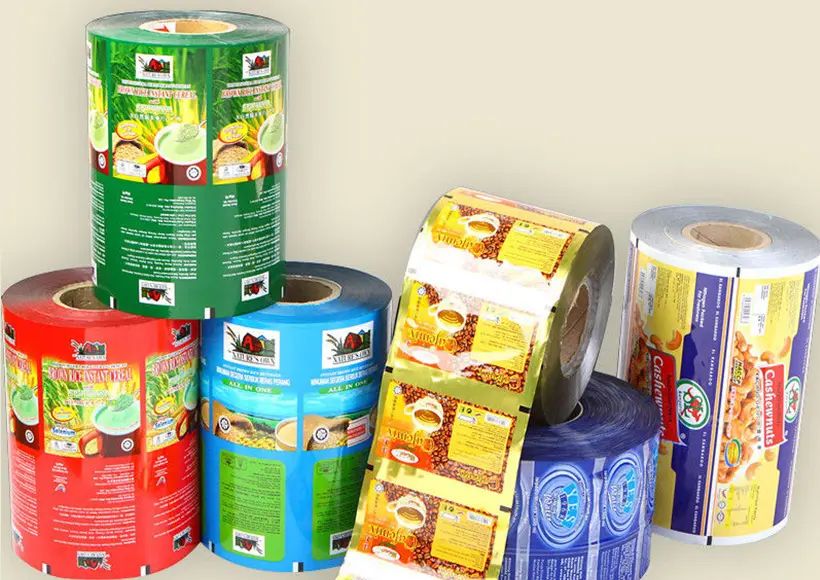
Transitioning your food product from traditional rigid metal cans to flexible retort pouches is a monumental step. For food manufacturers, retort bags offer incredible advantages: significantly lower shipping weights, faster heat penetration during thermal processing, and highly attractive, modern shelf appeal.
However, unlike a rigid tin can, a flexible retort pouch is not a simple, single-material container. It is a highly engineered, multi-layered "flexible can" designed to survive the brutal, high-pressure environment of an industrial autoclave (retort) at temperatures exceeding 121°C (250°F).
Choosing the wrong retort bag for your specific food matrix can lead to catastrophic failures—from catastrophic pouch bursting during the cooling cycle and delamination (layers peeling apart), to compromised hermetic seals that invite Clostridium botulinum and cause fatal foodborne illnesses.
This comprehensive guide is written for food scientists, R&D professionals, and procurement managers. We will bypass generic advice and dive deep into the material science, thermal dynamics, and technical specifications you must master to choose the right retort packaging for your product.
1. The Anatomy of Retort Bags: Understanding Multi-Layer Structures
A standard plastic bag will instantly melt and disintegrate inside a commercial autoclave. Retort bags, on the other hand, are constructed by laminating three to four distinct layers of specialized polymer films together using high-performance, heat-resistant adhesives. Every layer serves a non-negotiable, specific mechanical purpose.
The Outer Layer (PET): Printability and Physical Strength
The outermost layer is typically made of PET (Polyethylene Terephthalate). Usually around 12 microns thick, PET serves two main functions. First, it provides the physical rigidity and scuff resistance needed to protect the bag during transportation and handling. Second, it acts as the printing substrate. High-quality graphics are "reverse printed" on the inside of this clear PET layer before it is laminated to the rest of the pouch, ensuring the ink never touches the food or scratches off during the harsh retort process.
The Barrier Layer (Aluminum Foil vs. Nylon/AlOx): The Shelf-Life Engine
Sandwiched in the middle is the barrier layer. This is the most critical component for achieving a long, room-temperature shelf life (often 12 to 36 months). Its sole job is to block oxygen, moisture, and ultraviolet (UV) light from degrading the food. In premium pouches, this is a thin layer of Aluminum Foil (AL). For microwaveable pouches, alternative clear barrier coatings like AlOx (Aluminum Oxide) or SiOx (Silicon Oxide) are utilized.
The Inner Sealant Layer (CPP): The Heat-Resistant Guardian
The innermost layer—the only material that actually touches your food—is almost exclusively CPP (Cast Polypropylene).
Why is this important? Standard flexible packaging often uses PE (Polyethylene) as a sealant. However, PE begins to melt and lose its structural integrity around 105°C to 115°C. Because a standard botulinum cook requires temperatures of at least 121.1°C, a PE seal would fail, leaking food into the retort chamber. CPP, however, maintains its molecular stability and seal strength at temperatures up to 135°C (275°F), making it the mandatory sealant layer for any retort application.
2. Aluminum Foil vs. Clear Retort Pouches: Which Should You Choose?
The most common dilemma R&D teams face is choosing between a traditional opaque foil pouch and a modern transparent pouch. The decision strictly depends on how the consumer will heat the product and your required shelf-life targets.
Aluminum Foil Retort Bags (Opaque)
A classic 4-ply foil retort pouch structure usually looks like this: PET / AL / BOPA (Nylon) / CPP.
- The Advantages: Aluminum foil provides an absolute, zero-transmission barrier against oxygen, water vapor, and light. If you are producing military MREs (Meals Ready-to-Eat) or emergency survival rations that require a 3 to 5-year shelf life, foil is your only viable option. It also offers excellent thermal conductivity, helping the food reach sterilization temperatures slightly faster.
- The Drawbacks: You cannot microwave a foil pouch. Sparks will fly, and the microwave will be damaged. Consumers must heat the product by boiling the pouch in water or emptying the contents into a separate bowl first. Furthermore, consumers cannot see the product before purchasing.
Clear Retort Bags (Transparent)
A standard clear retort pouch structure looks like this: PET (coated with SiOx or AlOx) / BOPA (Nylon) / CPP.
- The Advantages: The biggest selling point is ultimate consumer convenience: these pouches are 100% microwave-safe. They also allow for transparent "windows" in the packaging design, letting the consumer see the high-quality ingredients inside (highly effective for premium pet foods or artisanal soups).
- The Drawbacks: Even the most advanced ceramic-coated (SiOx/AlOx) transparent barriers cannot match the absolute impermeability of solid aluminum. Clear pouches typically offer a shorter shelf life (usually 12 to 18 months). Additionally, exposure to retail lighting can cause color fading and flavor degradation in certain photosensitive foods over time.
3. Matching Retort Bags to Your Specific Food Matrix
You cannot buy a "one-size-fits-all" retort bag. The chemical composition and physical shape of your food will aggressively interact with the packaging materials during the intense heat of the autoclave cycle.
High-Fat and Highly Acidic Foods (Curries, Tomato Sauces, Oils)
Foods with high acidity (like tomato-based pasta sauces) or high fat content (like coconut milk curries or oily meats) pose a unique chemical threat. Under the extreme heat of 121°C, the essential oils and acids in the food can penetrate the inner CPP layer and attack the laminating adhesives holding the pouch layers together.
- The Solution: If left unaddressed, this causes delamination—the layers peel apart like an onion, ruining the pouch. When processing high-fat/high-acid foods, you must explicitly specify to your supplier that the pouch requires aliphatic polyurethane high-performance adhesives, which are chemically resistant to fat and acid degradation at retort temperatures.
Bone-in Meats and Seafood (Ribs, Shellfish, Chicken Wings)
If you are packaging sharp, rigid items like bone-in short ribs or crab legs, standard pouch thicknesses will fail. The vacuum-sealing process tightly pulls the film against the sharp edges, and the aggressive agitation of the autoclave will cause the bones to puncture the film from the inside out.
- The Solution: You must heavily reinforce the mechanical strength of the pouch by increasing the thickness of the BOPA (Biaxially Oriented Polyamide/Nylon) layer. Nylon provides exceptional puncture resistance and flexibility. You may also need to increase the overall thickness of the pouch from a standard 100 microns to a heavy-duty 130 microns or more.
Liquid vs. Solid Foods (Broths vs. Rice)
The physical state of your food dictates your headspace management. Liquids expand significantly when heated to 121°C. If you overfill a pouch with liquid broth, the thermal expansion will place immense stress on the CPP seals, leading to bursting.
- The Solution: Liquid foods require highly precise fill-volume control and a specific amount of residual headspace to accommodate thermal expansion. Conversely, solid foods like precooked rice or dense meats require a strong vacuum before sealing to remove trapped air, ensuring the pouch lays flat and heat transfers evenly to the core.
4. Critical Technical Specifications to Request from Suppliers
When negotiating with packaging manufacturers, do not just ask for "retort bags." To protect your product and your company's liability, you must demand a Technical Data Sheet (TDS) and verify the following specific metrics:
Oxygen and Water Vapor Transmission Rates (OTR & WVTR)
These two numbers dictate your exact shelf life. They measure how much oxygen and moisture can penetrate the bag over a 24-hour period.
- OTR (Oxygen Transmission Rate): Measured in $cc/m^2/24h$. For foil bags, this number should be essentially 0. For high-barrier clear bags, look for an OTR of less than 1.0. High OTR leads to lipid oxidation (rancidity) and color loss.
- WVTR (Water Vapor Transmission Rate): Measured in $g/m^2/24h$. Like OTR, lower is better. If WVTR is too high, moist foods will dry out, and dry foods (in the case of reverse contamination) will become soggy over a two-year shelf life.
Thermal Resistance Limits
Not all retort processes are 121°C. Some manufacturers use High-Temperature, Short-Time (HTST) processes that push the autoclave to 130°C or even 135°C to process foods faster and preserve flavor.
- You must verify the Maximum Operating Temperature of both the CPP sealant layer and the laminating adhesives. Using a standard 121°C-rated bag in a 130°C process will result in complete seal failure.
Seal Strength and Burst Pressure Resistance
Before you run thousands of bags through your expensive retort, you must know their mechanical limits.
- Seal Strength: Usually measured in Newtons per 15mm ($N/15mm$). You want a heat-seal strength that exceeds 40 N/15mm to ensure it survives the pressure differentials inside the autoclave.
- Burst Pressure Testing: Ask the supplier for their burst test results. This indicates how much internal pressure (in kPa or psi) the sealed pouch can withstand before popping. This data is absolutely crucial for your retort operator when programming the overpressure cooling phase of the autoclave cycle.
5. Form Factors and Consumer Convenience Features
Beyond material science, the physical shape and functional features of your retort bags dictate how consumers interact with your product on the retail shelf and in their kitchens.
Flat Pouches (3-Side Seal) vs. Stand-Up Pouches (Doypack)
- Flat Pouches (3-Side Seal): These are the workhorses of the retort industry, commonly used for single-serve items like tuna, pet food, or military MREs. They lay completely flat, maximizing space efficiency during shipping and rapid heat penetration during the autoclave cycle. However, they lack "shelf presence"—they must be stacked in display cartons or hung on pegboards.
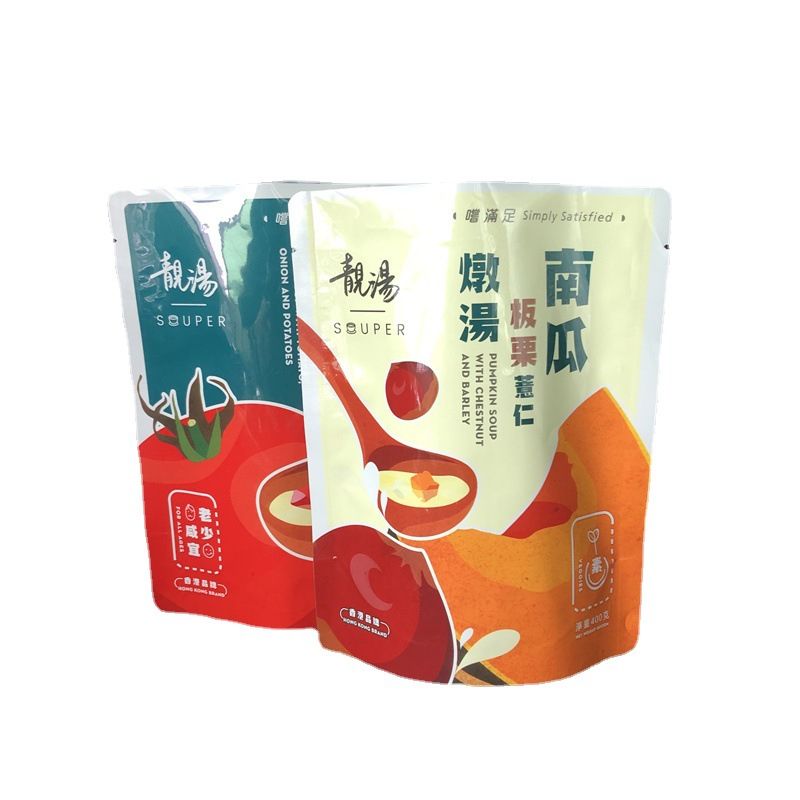
- Stand-Up Pouches (Doypack): Featuring a bottom gusset that allows the bag to stand vertically, Doypacks are the premium choice for retail ready-to-eat meals, soups, and sauces. They offer massive billboard space for branding. The trade-off? The thicker bottom gusset requires careful heat-penetration validation ($F_0$ studies) because the geometrical center of the pouch is thicker, taking longer to reach sterilization temperatures than a flat pouch.
Tear Notches, Spouts, and Zippers
Modern consumers demand convenience, but adding features to a retort pouch complicates the thermal process.
- Tear Notches: Essential for easy opening, but the notch must be precisely cut. If it is cut too deeply into the seal area, the extreme pressure of the autoclave can cause the seal to rip open.
- Spouts and Fitments: Popular for baby food and purees. The challenge is that the rigid plastic spout and the flexible pouch expand and contract at different rates under 121°C heat. You must ensure the manufacturer uses specialized retort-grade fitments and adhesives to prevent leaking around the spout base.
- Zippers (Resealability): Can you retort a zipper? Yes, but it is highly complex. Standard zippers will melt and fuse shut in an autoclave. Retort-grade zippers must be made of high-temperature PP (Polypropylene) and require extremely precise temperature control during the bag-making process to ensure they do not warp.
6. Equipment Compatibility: Retort Bags and Your Autoclave
As highlighted in our previous guide on What is an Autoclave, your choice of retort bag is irrelevant if your sterilization equipment cannot handle flexible packaging.
Why Overpressure Control is Non-Negotiable for Pouches
When a retort pouch reaches 121°C, the residual air and moisture inside the bag expand dramatically, creating significant internal pressure. Unlike a rigid metal can, a flexible pouch has no structural integrity to resist this expansion.
If your autoclave does not have highly accurate overpressure control (injecting compressed air into the chamber to counteract the internal pressure of the pouch), the pouch will inflate like a balloon.
- During the heating phase, this "balloon effect" stresses the CPP seals, leading to micro-leaks.
- During the cooling phase—when the temperature drops but the internal pressure of the food remains high—the pouches will violently burst if the chamber pressure is released too quickly.
Therefore, choosing retort bags means you must use a Water Cascade, Water Spray, or Steam/Air retort equipped with precise, active overpressure regulation. Standard static steam retorts meant for tin cans will destroy your pouches.
7. Common Pitfalls When Using Retort Bags
Even with the highest quality materials and state-of-the-art autoclaves, operator errors on the packaging line can lead to disastrous spoilage rates. Here is how to avoid the most common failures.
Ignoring Residual Air (Headspace Vacuuming)
The amount of air left inside the pouch before sealing is critical. Too much residual air acts as an insulator, creating "cold spots" that prevent the food from reaching commercial sterility, risking C. botulinum survival. Furthermore, excessive air expands violently during retorting, exceeding the autoclave's overpressure capacity and bursting the seams.
- The Fix: Ensure your vacuum sealing equipment is pulling a consistent, strong vacuum, leaving only the minimum required headspace (typically less than 10cc of residual gas) based on your Process Authority's validation.
Food Contamination in the Seal Area
This is the number one cause of leaky retort pouches. If a single drop of sauce, a grain of rice, or a smear of fat gets caught in the top seal area before the heat sealer clamps down, the CPP layer cannot fuse together completely.
- The Fix: Use filling nozzles designed to dive deep into the pouch and cleanly cut off the product flow without dripping. Implement ultrasonic sealing technology or rigorous visual/x-ray inspections to detect seal contamination before the pouches enter the retort baskets.
Improper Racking and Basket Loading
You cannot simply dump flexible pouches into an autoclave basket. If pouches are stacked tightly on top of one another, the steam or hot water cannot circulate between them. The pouches in the center of the pile will be under-processed and dangerous to consume.
- The Fix: Every single retort pouch must be separated by rigid, perforated spacer mats or specialized racking systems. This ensures 360-degree flow of the heating medium around every pouch, guaranteeing uniform temperature distribution.
8. FAQs
Q: Are retort bags BPA-free and FDA approved?
A: Yes, high-quality retort bags manufactured for the food industry are universally BPA-free. Furthermore, reputable packaging suppliers must provide documentation proving that all layers (especially the inner CPP food-contact layer) and laminating adhesives comply with stringent FDA regulations (or equivalent local authorities) for high-temperature food contact.
Q: How long do foods last in a retort bag?
A: Shelf life depends on the barrier layer. Foods packed in opaque, aluminum foil retort bags can easily maintain quality and commercial sterility for 3 to 5 years at room temperature. Foods in transparent (clear) retort bags typically have a shelf life of 12 to 18 months due to the slight oxygen and moisture transmission over time.
Q: Can retort bags be recycled?